
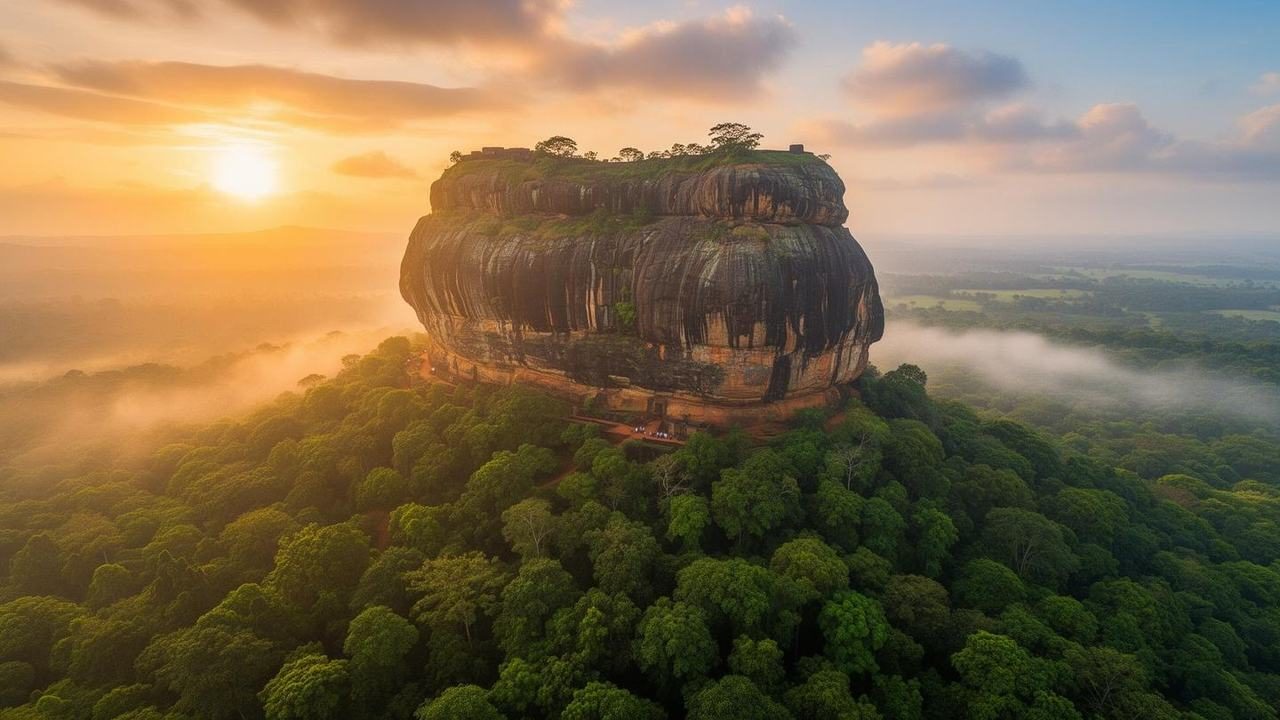
Sigiriya Lion Rock
A 5th-century rock fortress, frescoes and palace ruins at 200m.
Overview
A 200-metre volcanic rock fortress built by King Kasyapa in the 5th century AD. One of Sri Lanka's two UNESCO World Heritage Sites. The climb reveals ancient frescoes of celestial maidens, the mirror wall inscriptions, and the summit palace ruins.
Traveller information
ETA/e-visa is commonly required before travel.
Sri Lankan Rupee (LKR). Keep cash for smaller towns.
Sinhala, Tamil and English in tourist areas.
Halal dining is good in Colombo, Kandy, Galle and Muslim communities.
Wildlife and hill-country travel are safe with licensed guides.
Private driver is best; train works beautifully for Kandy to Ella.
History & heritage
King Kasyapa seized the throne from his father in 477 AD and built the fortress. After his defeat, Sigiriya became a Buddhist monastery for nearly 800 years.
- 477
King Kasyapa builds the fortress
- 495
Abandoned after battle, becomes a monastery
- 1831
Rediscovered by Jonathan Forbes
- 1982
UNESCO World Heritage status
Insider tips
- Climbing takes 1.5–2 hours each way
- Wear sturdy shoes — steps are steep and slippery in places
- The Gallery of Frescoes (a small detour off the main path) is a highlight many skip
- Bring 2 litres of water
- Cooling fan + hat essential outside winter
Nearby attractions
Pidurangala Rock
3 km
Dambulla Cave Temple
30 min
Frequently asked questions
Book this attraction
Check availability for Sigiriya Lion Rock
Share your dates and travellers so the Tropisoul team can confirm live options.